Key points
- Extension charts give ground spices anywhere from 6 months to 3 years, depending on the source and on whether the jar is open.
- Whole spices last longer than ground ones in every chart.
- Heat from the stove, oven and dishwasher, light and steam all shorten the time.
- Smell, taste and color tell you more than the date: a faded color usually means faded flavor.
What the figures actually say
Ask three extension services how long ground cumin lasts and you will get five answers. Clemson's Home & Garden Information Center gives ground spices and herbs 2 to 3 years in tightly sealed containers on one factsheet, and 6 months on another. Ohio State University Extension writes one year in its text and 6 months in its chart. NDSU Extension, quoting a leading spice manufacturer, says unopened ground spices keep their freshness for three years and stay flavorful for up to a year once opened.
The figures stop looking contradictory once you see what each one measures. Some count from the day the jar is sealed, some from the day you open it, and the short ones describe the best flavor rather than the last usable spoonful. Clemson's pantry factsheet puts the difference in one line: pantry foods may stay safe past the recommended time, yet flavor, texture and nutritive value decline. Read the short figure as your target and the long one as the outer edge.
| Source | Ground spices and dried herbs | Whole spices |
|---|---|---|
| Clemson HGIC 3525, tightly sealed containers | 2 to 3 years | 4 to 5 years |
| Clemson HGIC 3480, pantry chart | 6 months | 2 years |
| Ohio State HYG-5401, text | 1 year | 2 years |
| Ohio State HYG-5401, chart | 6 months | 1 to 2 years |
| NDSU Extension, citing a spice maker | 3 years unopened, up to 1 year after opening | 4 years unopened, up to 1 year after opening |
Why whole spices outlast ground ones
Every chart in the table agrees on one point: whole spices keep longer than ground ones. Ohio State adds that whole cloves, nutmeg and cinnamon sticks hold their quality past the 2-year mark. A peppercorn or a clove stays in one piece until you crack it, while a ground spice has its whole surface open to the air from the day it was milled.
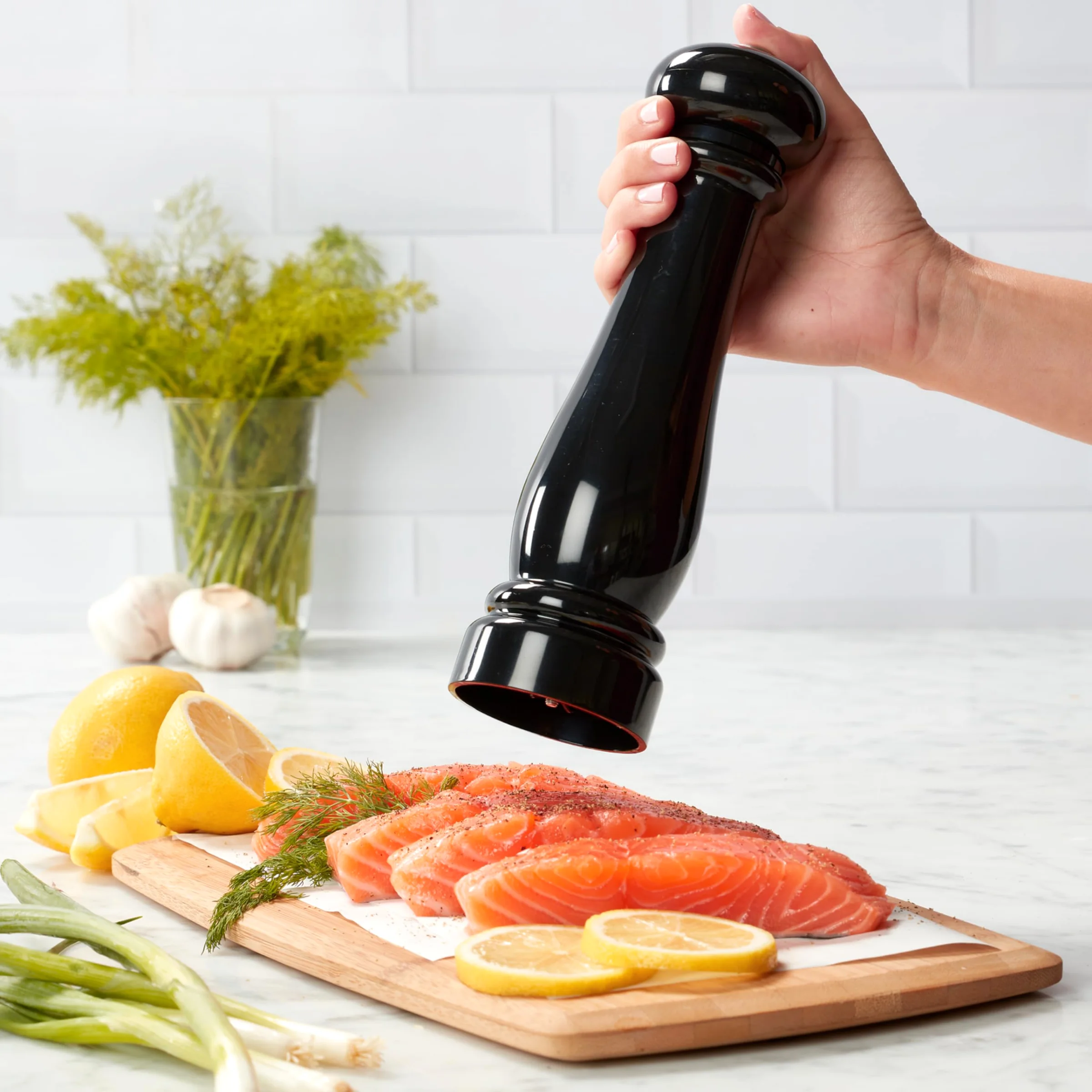
That is the case for buying peppercorns and coarse salt whole and grinding them at the table. Salt is the easy one. Clemson lists it as keeping indefinitely, so a salt mill only has to grind it, not protect it. The guide to salt and pepper grinders covers the mills themselves. For ground spices you cook with every week, the jar on the counter matters more.
Where the jars should live
The three extension services agree on the enemies: heat, light and moisture. Ohio State says not to store spices on the counter close to the stove. Clemson rules out storage near oven ranges, hot water pipes and heating ducts. NDSU names the dishwasher and the oven, and Ohio State adds the cabinet above the range and the one beside the refrigerator exhaust, which it says are better used for dishes and pans.
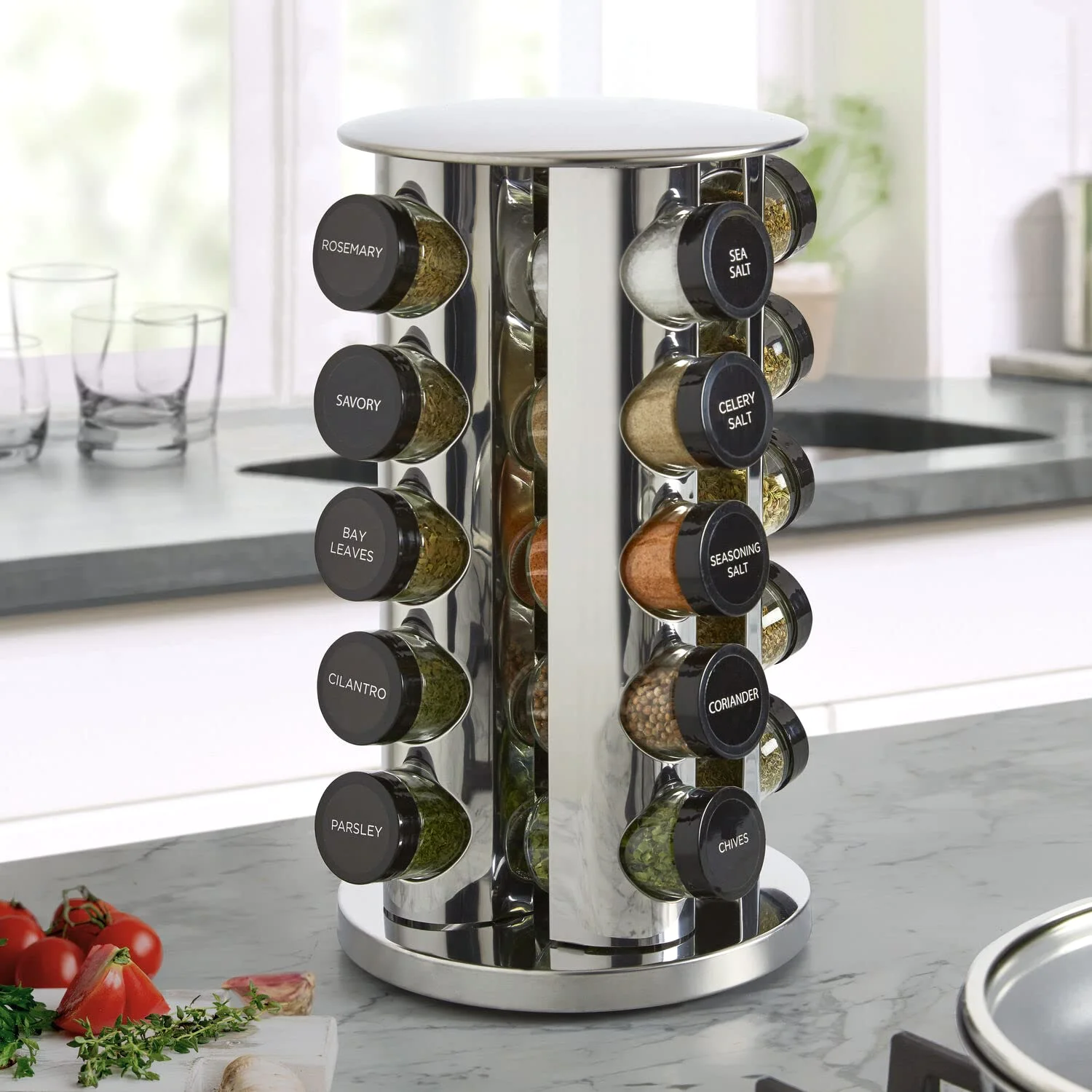
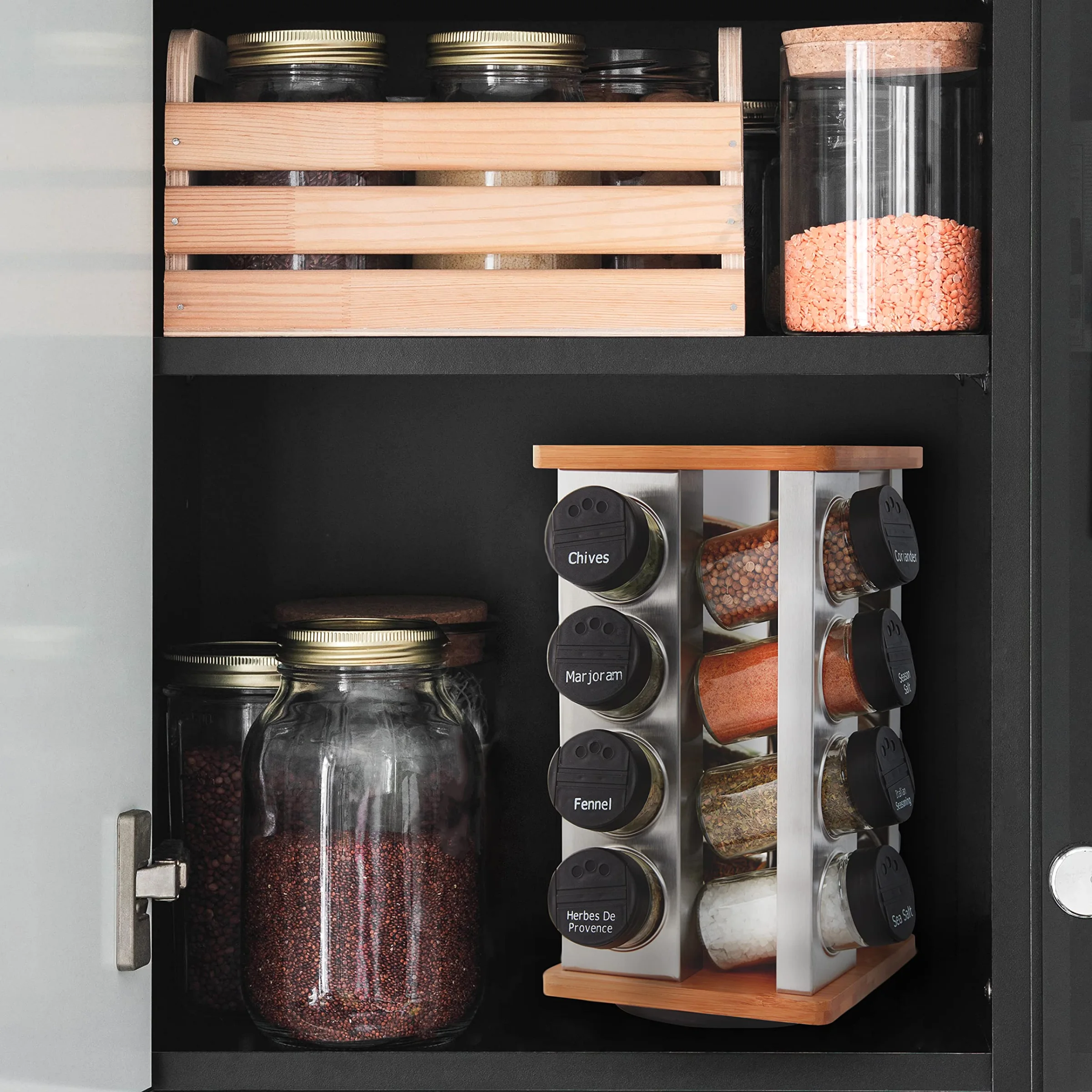
That leaves a cool cupboard, a drawer away from the oven, a pantry shelf, or a counter far enough from the burners that you cannot feel their heat with your hand. A revolving rack does not have to sit by the stove to be within reach. Set it where you prep, a step from the pan, and the jars stay out of the steam. The revolving racks on our spice rack shelf turn on their bases, so a corner a few feet away still brings every label to the front.
Steam is the quiet one
Moisture gets into spices by the spoonful. NDSU points to two habits: measuring with a damp spoon, and opening a jar over a steaming pan. Both let water into the jar, and a ground spice that takes on water clumps. Measure into a dry spoon away from the pot, then carry the spoon to the pan.
Most jars on our racks have removable sifter caps, so you can shake straight onto a cutting board or into a bowl. Shaking a jar over a boiling pot is the habit to drop. Keep the cap on between uses, too. Clemson lists spices among the pantry foods insects can get into, and suggests tightly sealed glass, metal or rigid plastic containers.
- Measure with a dry spoon, never one that has been in the pot.
- Shake or pour away from rising steam.
- Put the cap back on the moment you finish.
- Do not freeze spices. NDSU warns that it can bring moisture into the containers.
How to tell a spice has faded
Dates help, but your nose is faster. NDSU suggests sniffing a spice, tasting it and looking at its color, since a faded color may mean the flavor has faded too. Ohio State's chart gives the same test: at the times listed, check the aroma, and if it has faded, replace the spice. Paprika that has turned from red to brown, or basil that has gone the color of hay, has given up most of what you bought it for.
A quick routine works. Shake a little into your palm, rub it between two fingers and smell it. A strong, clean scent means the jar is still working. A dusty or faint one means it is time for a refill, or for using twice the amount in a forgiving dish such as a stew while you wait. NDSU notes that adding extra spice to make up for lost flavor can change the color and quality of a dish, so this is a stopgap, not a plan.

Dating jars and buying smaller
The simplest fix for old spices is a pen. NDSU suggests labeling spices with the date of purchase and the date of opening, and Clemson recommends writing the purchase date on anything that has no date of its own. Put the date on the bottom or the side of the jar where you will see it when you lift it from the rack.
Then match the size to the pace. NDSU advises buying smaller containers unless you plan to use a larger amount within the best storage time. A spice you use once a season belongs in a small jar, refilled when needed. Our 3 oz empty glass jars hold small amounts and screw shut, and they come in sets of 12. On most of our filled racks, the refill program lets you register the rack within 90 days of purchase and order refills for up to 5 years, with the terms on the packaging.
- 1
Empty the cupboard and smell every jar. Set aside the ones that smell of nothing.
- 2
Write today's date on each jar you keep, and the purchase date on each new one.
- 3
Put the jars you use weekly on the rack and the rest in a drawer away from the oven.
- 4
Six months from now, smell the rack again and refill what has faded.
A short list for the counter
If you are setting up a rack from scratch, start with what you cook. A filled rack such as our Heritage 16 arrives with bay leaves, basil, celery salt, chives, coriander, crushed mint, fennel seed, herbes de provence, Italian seasoning, marjoram, oregano, parsley, pizza seasoning, rosemary, sea salt and seasoning salt, and the assortment may vary. Use the ones you reach for. Swap the ones you never open for spices you do cook with, so no jar sits on the rack for two years untouched. The guide to choosing a spice rack helps you size the rack to that list.
Every piece named here is part of the Kamenstein collection.